
Atlanta Hormone Replacement
Testosterone Replacement Therapy
Dr. Parry is a recognized leader in the field of bio-medical hormone replacement and is well-versed with all medical therapies to treat low testosterone.
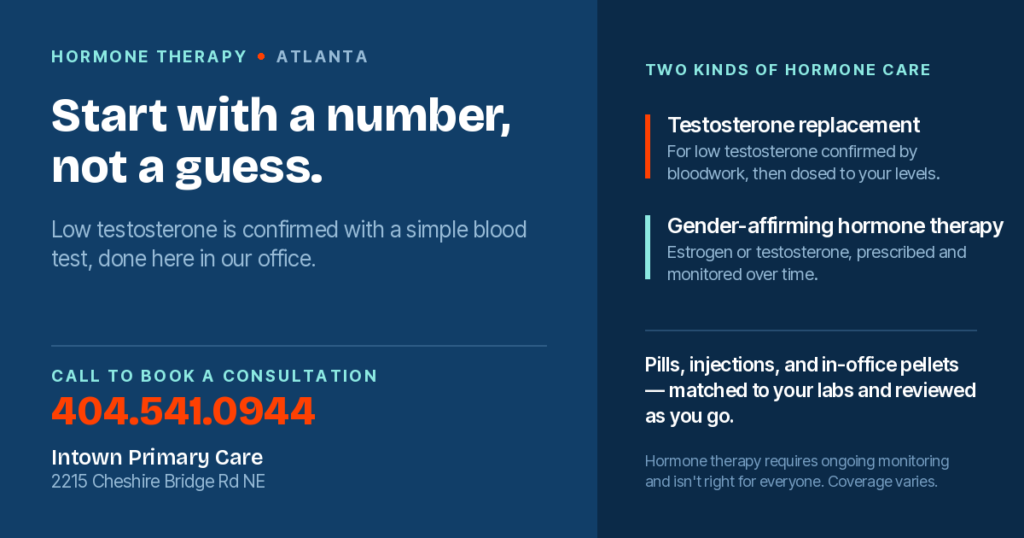
Testosterone is a hormone found in both men and women, but the level in women is minimal. Low testosterone is usually associated with men after the age of 50, but in reality it can occur at any age, even in teenagers and young adults. As of 2010, over 13 million men are thought to have low testosterone, but most don’t even know it. At IPC, low testosterone is easy to identify by a simple blood test done in the office.
Low testosterone is associated with the following male medical conditions:
- Obesity
- Diabetes
- High Blood Pressure
- High Cholesterol
- HIV
- COPD (Lung Disease)
- High stress in your life
Testosterone Treatment Options
Several safe and effective options are available for those seeking testosterone replacement therapy. These include injections, oral medications, and topical solutions. Some popular options include XYOSTED®, JATENZO®, and TLANDO®.
XYOSTED® Auto-Injector
XYOSTED® is a weekly testosterone injection you give yourself at home. It’s testosterone enanthate in a single-use auto-injector, injected just under the skin of the abdomen once a week — not into muscle. It comes in three strengths, and we’ll train you on how to use it before you take it home.
It’s approved for adult men whose low testosterone comes from an underlying medical condition. Its safety and effectiveness haven’t been established for low testosterone related to aging alone, and it isn’t for women or anyone under 18.
The medication is suspended in sesame oil, so tell us if you have a sesame allergy. Like all testosterone therapies, it can raise blood pressure and red blood cell counts, which we monitor. XYOSTED is a Schedule III controlled substance.
JATENZO®
JATENZO® is an oral testosterone replacement therapy. Its active ingredient is testosterone undecanoate, taken as a capsule twice daily with food — dietary fat is needed for proper absorption.
It’s approved for adult men whose low testosterone comes from an underlying medical condition, confirmed with morning blood tests before starting. It hasn’t been established for low testosterone related to aging alone, and isn’t for women or anyone under 18.
JATENZO can raise blood pressure and red blood cell counts, which we monitor, and isn’t recommended if your blood pressure isn’t well controlled. It’s a Schedule III controlled substance.
TLANDO®
TLANDO® is also an oral testosterone undecanoate, taken as two capsules twice daily with food. Unlike most testosterone therapies, it uses a fixed dose with no titration — everyone takes the same amount. About a month in, we check your level to see whether it’s working for you.
Same approvals and limits as JATENZO: adult men with low testosterone from a medical cause, not aging alone, and not for women or anyone under 18. One difference — TLANDO can raise prolactin, so we check that before you start and again a few months later.
TLANDO isn’t interchangeable with other oral testosterone capsules at the pharmacy. It’s a Schedule III controlled substance.
Testosterone Deficiency Quiz
Take this quick testosterone deficiency quiz to determine if you have low testosterone.
Transgender Hormone Therapy
In addition to general testosterone therapy, Dr. Parry specializes in hormone therapy for transgender patients.
Transgender hormone therapy, also known as cross-sex hormone therapy or gender-affirming hormone therapy, is a form of medical intervention that provides hormones to trans individuals in order to bring their bodies into alignment with their gender identity. It can be used to increase the amount of testosterone in transgender men and increase the amount of estrogen in transgender women so that they can more easily manifest physical characteristics associated with their gender. This can help transgender individuals feel more comfortable and accepted in society, which is especially important for those who live with gender dysphoria.
Hormone therapy is typically initiated by a doctor and monitored closely. Depending on the individual, hormones can be taken orally or through injections. Side effects of hormone therapy may include changes in body fat distribution, fertility issues, and cardiovascular risks such as high blood pressure. It is essential that you consult with a qualified medical professional before beginning any form of hormone therapy, as there are risks associated with this type of medical intervention.
With the right support and care, hormone therapy can be an important step towards living one’s truth and feeling accepted in society.